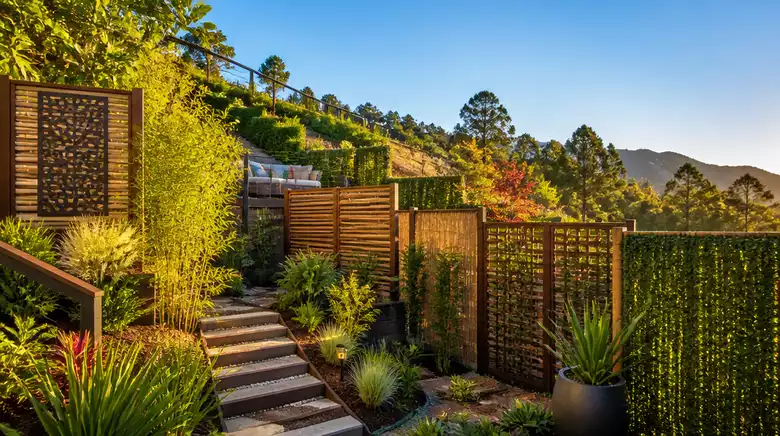
Privacy Screens for Sloped Yards
Transforming your sloped yard into a private sanctuary requires thoughtful consideration and planning. With the right approach, you can create a peaceful retreat that shields you from prying eyes while enhancing the beauty of your outdoor space. Are you ready to unlock the secrets to achieving privacy in your landscape?
What You Will Learn
- Assess your sightlines to identify areas where privacy is needed most.
- Differentiate between immediate privacy solutions and long-term landscaping strategies to meet your goals.
- Understand the importance of addressing slope-specific installation considerations, such as drainage and anchoring structures.
- Create a solution matrix comparing the cost, effectiveness, and maintenance requirements of various privacy options.
- Utilize native and hardy plant choices for optimal coverage and less maintenance in sloped yards.
- Engage landscape architects for expert advice on achieving a stable and attractive privacy solution tailored to your yard.
Comparing Immediate vs Long-term Privacy Solutions
Evaluate the differences between immediate and long-term privacy solutions for sloped yards based on cost, time, and effectiveness. For more ideas on how to create a secluded atmosphere, consider exploring various creating private outdoor retreats to inspire your design.
Immediate Solutions
- Movable screens
- Outdoor curtains
- Quick setup
- Lower upfront cost
Long-term Strategies
- Planting trees and shrubs
- Seasonal interest
- Higher overall investment
- Natural aesthetic appeal
Cost Comparison
Immediate solutions are generally less expensive initially, while long-term strategies can lead to greater investment but provide lasting benefits.
Effectiveness Overview
Immediate solutions offer quick privacy, while long-term strategies enhance the landscape's beauty and sustainability.
Understanding Privacy Needs for Sloped Yards
When it comes to creating a peaceful oasis in your sloped yard, understanding your privacy needs is the first step. Sloped properties can present unique challenges when it comes to maintaining seclusion from prying eyes. At Branch & Border, I often find that clients are eager to transform their outdoor spaces into serene retreats, and pinpointing where you need privacy is essential for effective landscaping.
One of the key factors to consider is your sightline. What can you see from your deck, patio, or windows? Are there neighbors’ homes or busy streets that intrude upon your view? By identifying the areas that need screening, you can begin to envision how to use trees, shrubs, or other structures to create a natural privacy barrier.
Identifying Your Sightline: Where Is the Overlook?
To effectively enhance your privacy, you need to assess your views carefully. Start by walking around your property and noticing where you feel exposed. Take note of the angles and heights of neighboring structures or landscapes that impact your privacy. This assessment will guide your decisions in choosing the right landscaping solutions.
After pinpointing your sightlines, consider the heights of potential privacy screens. You might want taller trees or shrubs where the overlook is most significant, gradually transitioning to shorter plants in areas that require less coverage. This layered approach creates a more natural feel while also fulfilling your privacy goals. For detailed guidance on plant selection, explore selecting plants for privacy screens.
- Check views from multiple angles: decks, patios, and windows.
- Identify areas that make you feel exposed.
- Think about how your needs change with the seasons.
Assessing Views from Decks, Patios, and Windows
Views from your outdoor spaces can greatly influence how you enjoy your environment. If you have a deck overlooking a neighbor's yard, it might feel intrusive, affecting your relaxation time. Consider doing a simple survey—what do you see when you look out? This will help pinpoint where you need the most coverage.
Take a few minutes to sit outside and observe at different times of the day. You might be surprised at how the angle of the sun or the activity levels in your neighborhood change your perception of privacy. Remember, it's not just about what you see but also how you feel when you’re in your outdoor space!
Determining Your Privacy Goals: Immediate vs. Long-term Solutions
Knowing whether you need immediate privacy solutions or are looking for long-term landscaping strategies will greatly impact your choices. If you need something quick, you might consider temporary screens or movable plants. These options can offer a quick fix while you plan for a more permanent solution.
On the other hand, if you’re thinking long-term, consider investing in a combination of trees and shrubs that will mature beautifully over time. This approach not only enhances privacy but also adds beauty to your yard as the plants grow and flourish. At Branch & Border, we focus on sustainable solutions, ensuring your landscape thrives for years to come!
- Immediate solutions: movable screens, outdoor curtains.
- Long-term strategies: planting trees and shrubs for natural privacy.
- Consider seasonal changes when setting your goals.
Quick Summary
Here's a brief recap of the key points discussed so far:
- Understanding your privacy needs begins with assessing your sightlines and identifying where you feel exposed.
- Consider both immediate and long-term privacy solutions, such as movable screens versus strategically planted trees and shrubs.
- Address slope-specific installation challenges to ensure the sustainability and functionality of your privacy solutions.
Practical Implementation for Sloped Yard Privacy
When it comes to enhancing privacy in sloped yards, practical implementation is key. This involves understanding the unique challenges that sloped terrain presents and addressing them effectively. As a landscape designer at Branch & Border, I’ve seen firsthand how thoughtful planning can transform a sloped area into a private oasis!
One of the most crucial aspects of this process is addressing the slope-specific installation considerations. By carefully assessing how water drains and how your space is graded, we can avoid potential pitfalls like erosion or water pooling. Implementing the right solutions early on can lead to a beautifully functional outdoor space that keeps your privacy intact.
Addressing Slope-Specific Installation Considerations
Understanding drainage and grading needs is essential when you’re working with slopes. Poor drainage can lead to big issues over time, such as soil erosion or plant failure. To keep your landscaping thriving and functional, it's important to:
- Evaluate existing drainage patterns before installation.
- Consider installing French drains if necessary.
- Use native plants that are well-adapted to local moisture conditions.
Moreover, anchoring freestanding structures on sloped terrain can be a challenge. It's vital to ensure that your fences, walls, or other privacy solutions are securely anchored to prevent shifting or collapsing. Techniques such as using concrete footings or reinforcing stakes can be beneficial. For more information on securing structures, consider reading about enhancing your yard with living fences.
Lastly, incorporating landscape architects into your project can be a game-changer. Their expertise allows for optimal designs that not only address privacy but also ensure that your slope remains stable and beautiful. They can suggest the best materials and configurations tailored specifically for your space.
Making Informed Decisions: Comparing Privacy Solutions
Choosing the right privacy solution for your sloped yard involves considering various factors, including cost, speed, and effectiveness. As you embark on this journey, it’s helpful to evaluate your options based on these criteria. This way, you can ensure that your investment is worthwhile and aligns with your vision for your outdoor space.
Creating a solution matrix can help simplify this process. By listing out potential privacy solutions and comparing them side by side, you'll have a clearer picture of what works best for you. Here’s a quick example of what to include:
- Cost estimates for each option.
- Timeframe for installation.
- Long-term maintenance needs.
- Visual appeal and effectiveness in creating privacy.
Exploring DIY projects can also be a fun and rewarding way to add custom privacy solutions. Not only can you save on costs, but you’ll also gain a sense of ownership as you create something special for your space!
Frequently Asked Questions About Privacy Screens for Sloped Yards
As I engage with clients at Branch & Border, some questions come up frequently regarding privacy screens for sloped yards. Here are a few that might help as you consider your own project:
How High Should My Privacy Screen Be on a Slope?
The height of your privacy screen should be determined by the slope's angle and your specific privacy needs. Generally, a good rule of thumb is to have your screen reach at least six feet high at the highest point.
What Are the Best Plant Choices for Sloped Yard Privacy?
For sloped yards, it's wise to choose hardy plants that can thrive in the conditions. Consider:
- Evergreen shrubs for year-round coverage.
- Fast-growing climbers like ivy or jasmine for quick results.
- Deciduous plants for seasonal interest.
How Do I Maintain Privacy Screens with Local Flora?
Maintaining your privacy screens doesn't have to be daunting. Regular pruning, monitoring for pests, and ensuring proper watering will keep your plants healthy and thriving. Plus, incorporating native plants often leads to less maintenance, which is a win-win!
What are the key considerations for installing privacy solutions on a sloped yard?
Key considerations include evaluating existing drainage patterns, addressing grading needs, and securely anchoring any freestanding structures to prevent shifting or collapsing. Consulting with landscape architects can also provide optimal designs tailored to your specific slope.
What are the benefits of long-term privacy strategies over immediate solutions for sloped yards?
Long-term strategies, such as planting trees and shrubs, offer lasting benefits by enhancing the landscape's beauty and sustainability. While they may require a higher initial investment, they provide a natural aesthetic appeal and mature beautifully over time, leading to greater overall satisfaction and environmental benefits.
How can I effectively identify my privacy needs in a sloped yard?
To identify your privacy needs, you should assess your sightlines from various vantage points like decks, patios, and windows. Walk around your property and note areas where you feel exposed. Consider how your needs might change with the seasons and the angles and heights of neighboring structures that impact your privacy.
Conclusion and Next Steps for Your Privacy Project
In summary, enhancing privacy in sloped yards involves careful planning and thoughtful implementation. By considering slope-specific challenges, comparing your options, and seeking professional guidance when needed, you can create a private sanctuary that fits your needs.
So why wait? Start your privacy solution today and reimagine your outdoor space with the help of Branch & Border. Your dream of a serene and secluded yard is just a project away! Let’s make it happen together!
Recap of Key Points
Here is a quick recap of the important points discussed in the article:
- Identify your sightlines by assessing views from decks, patios, and windows to determine where additional privacy is needed.
- Consider the height and type of privacy screens based on the exposure of your property, using a layered approach for a natural feel.
- Decide between immediate solutions (movable screens, outdoor curtains) and long-term strategies (planting trees and shrubs) for privacy enhancement.
- Address slope-specific installation considerations, including drainage and securing structures to prevent shifting.
- Create a solution matrix to evaluate privacy options based on cost, installation time, maintenance needs, and effectiveness.
- Choose hardy plants for privacy, including evergreens, fast-growing climbers, and deciduous plants for seasonal interest.